Common Steak Grilling Mistakes (and How to Fix Them): Flare-Ups, Dry Meat, No Crust
There’s nothing more disappointing than buying a nice steak, firing up the grill… and ending up with meat that’s burnt outside, gray inside, or dry like shoe leather. Most of the time, the problem isn’t the steak. It’s a few small mistakes on the grill that are easy to fix once you know what to look for.
This guide breaks down the most common steak grilling mistakes—flare‑ups, dry meat, and weak crust—and shows simple, practical ways to fix each one so steak night actually feels worth it.
Mistake #1: Putting a Wet, Ice-Cold Steak Straight on the Grill
Many people pull steak straight from the fridge, maybe even straight from the package, and throw it on the grill. That almost guarantees uneven cooking and a weak crust.
Why it’s a problem:
- A very cold center cooks slower, so the outside overcooks while the inside lags behind.
- Surface moisture turns to steam, which stops browning and creates gray meat instead of a seared crust.
The Fix:
- Take steak out of the fridge 20–30 minutes before grilling so it’s not icy-cold.
- Pat it completely dry with paper towels on all sides before seasoning.
- Let it sit briefly after salting so the surface dries again before it hits the heat.
Dry surface + not-freezing-cold center = better sear and more even cooking.
Mistake #2: Grill Not Hot Enough (No Crust, Overcooked Inside)
A lukewarm grill is one of the biggest reasons steaks come out gray and dry instead of golden-brown and juicy.
Why it’s a problem:
- Without high heat, the Maillard reaction (the browning that gives crust and flavor) happens slowly.
- While the outside slowly browns, the inside keeps cooking and often ends up overdone.
The Fix:
- Preheat the grill properly. Aim for a cooking surface around 450–550°F for steak.
- Give gas grills at least 10–15 minutes to fully heat; with charcoal, wait until coals are glowing and covered in light ash.
- Use a two-zone setup: one hot direct side for searing, one cooler side for finishing.
Sear first over high heat to build crust, then move to the cooler zone to bring the inside up to temperature without burning the outside.
Mistake #3: Massive Flare-Ups Burning the Outside
Fat from steak dripping onto flames can cause sudden flare‑ups—big bursts of fire that char the outside while the inside is still undercooked.
Why it’s a problem:
- Flare-ups create bitter, burnt flavors.
- They also cook the outside much faster than the inside, making it hard to hit the right doneness.
The Fix:
- Keep the grill grates clean and scrape off built‑up grease; old fat and bits ignite easily.
- Use that two‑zone setup: a hot side and a cooler side with no direct flames. If flames jump up, move the steak to the cooler side until they die down.
- Avoid very sugary marinades directly over high heat, and add pepper or sugary glazes later in the cook so they don’t burn.
- If flames surge, briefly close the lid to reduce oxygen and let the flare settle.
Controlling flare‑ups is less about avoiding fire completely and more about having a safe place to move the meat when flames get too high.
Mistake #4: Overcooking the Steak (Dry, Tough, Gray)
Eyeballing doneness or cutting into the steak on the grill often leads to overcooked, dry meat.
Why it’s a problem:
- Cutting into steak on the grill lets juices spill out and dries the meat.
- Guessing at doneness usually means cooking “until it looks safe,” which often equals overdone.
The Fix:
- Use an instant‑read thermometer. It’s the easiest upgrade for consistent steak.
- Insert the thermometer into the thickest part from the side, not the top.
- Let the steak rest 5–10 minutes off the heat so juices redistribute instead of running out onto the plate.
This one habit—checking temperature instead of guessing—solves most “why is my steak always dry?” problems.
Mistake #5: No Crust (Steak Looks Boiled, Not Grilled)
Sometimes steak comes off the grill cooked through but pale, with no real crust or grill flavor.
Why it’s a problem:
- No crust means less Maillard reaction, which means less flavor.
- It also makes steak look less appetizing, like it was steamed rather than grilled.
The Fix:
- Dry the steak very well and oil lightly—too much oil can cause flare‑ups, but a light coat helps browning.
- Make sure the grill grates are hot and clean before you add the steak.
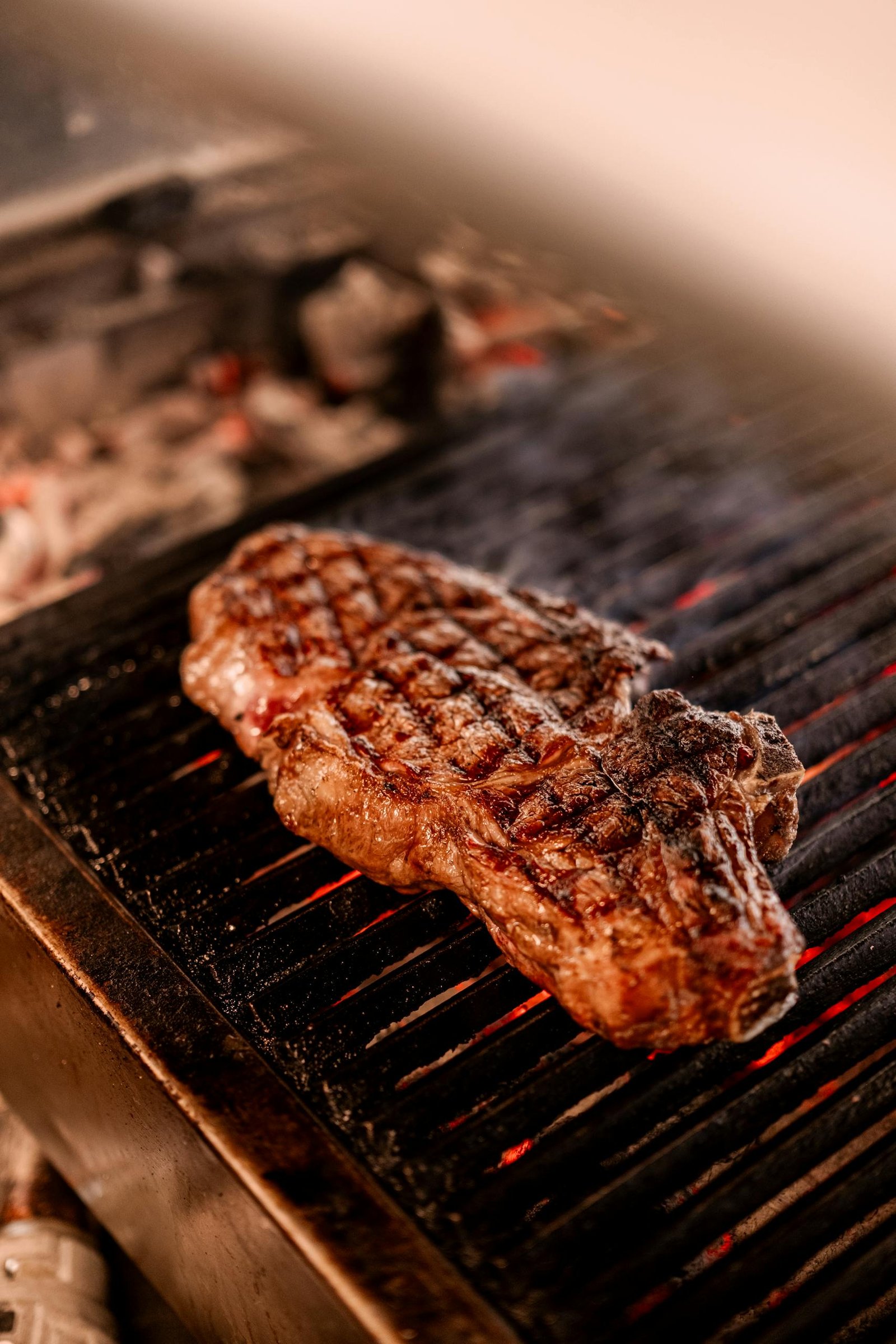
- Don’t constantly move or press the meat. Give each side a few minutes of undisturbed contact with the hot grates so a crust can form.
- Avoid crowding the grill; overcrowding lowers the temperature and traps steam.
Dry surface + high heat + patience = real crust.
Mistake #6: Flipping Wrong (Too Soon, Too Often, or Not At All)
There’s a lot of debate about flipping: once, twice, or many times. The biggest problem for beginners is flipping too soon or fussing with the steak constantly.
Why it’s a problem:
- Flipping too soon tears the meat and pulls off the forming crust.
- Poking, pressing, and moving the steak all the time stops good browning and squeezes out juices.
The Fix:
- Let the first side cook long enough to release from the grates on its own; if it sticks badly, it may need a bit more time before flipping.
- Use a steady, gentle flip with tongs (no fork poking).
- Don’t press the steak down—those sizzling juices you see squeezing out are flavor leaving the meat.
Whether the steak is flipped once or a few times matters less than giving each side real time on hot grates without constant interference.
Quick “Save Your Steak” Checklist
When grilling steak, these simple checks can rescue most cooks:
- Before grilling:
- Is the steak dry and close to room temperature—not wet and ice-cold?
- Is the grill fully preheated and set up with a hot and a cooler zone?
- While grilling:
- Are you watching for flare‑ups and ready to move the steak to a cooler zone?
- Are you leaving the steak alone long enough to develop color before flipping?
- Before serving:
- Did you check the center with a thermometer instead of guessing?
- Did you let the steak rest a few minutes before cutting so it stays juicy?
Fixing these common mistakes doesn’t require chef skills—just a bit of attention to heat, timing, and moisture. With those details under control, steak night becomes a lot more reliable and a lot more fun.